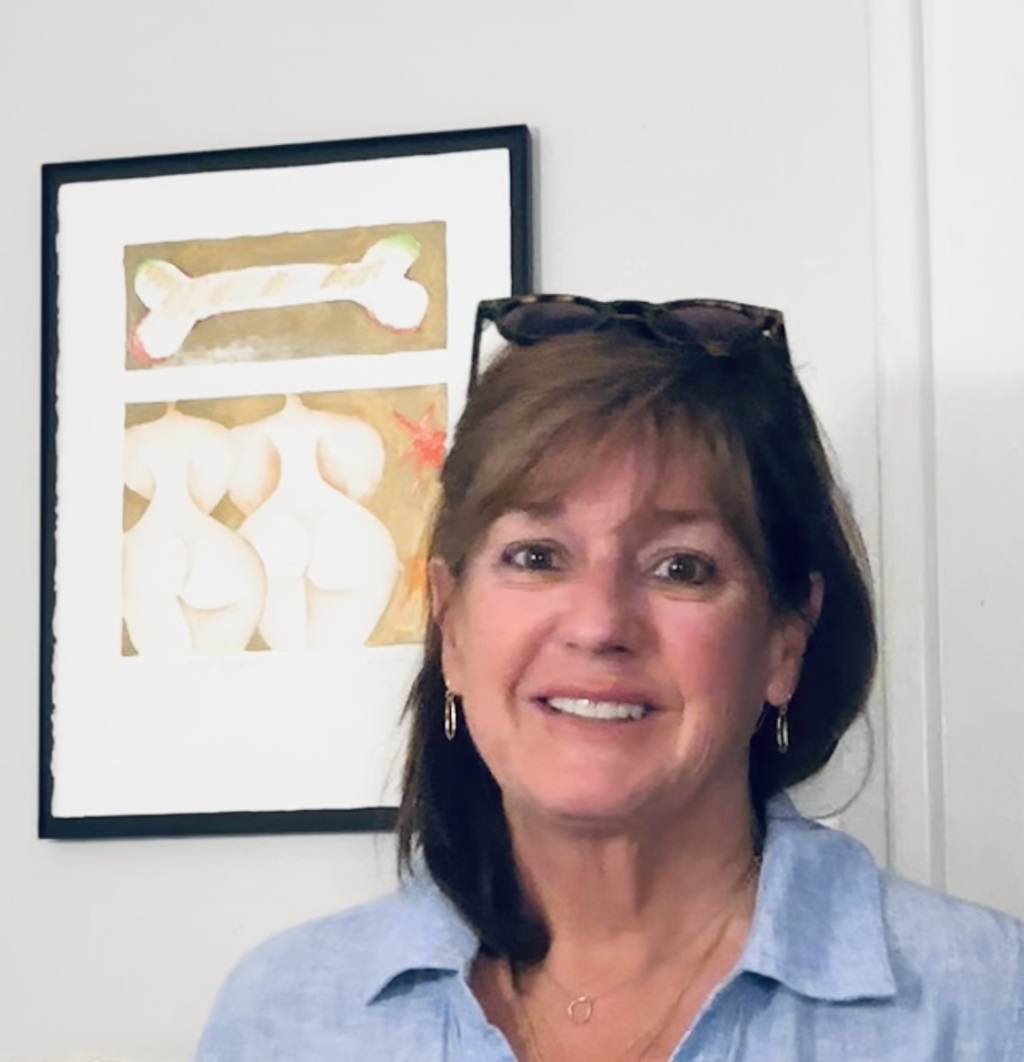
I'm Elizabeth... although most people these days who really know me call me Birdie.
I'm a Realtor, a mom, a grandmother, a traveler, a reader, a Mahjong player, and someone who has always believed that life is meant to be lived, not watched from the sidelines.
I've traveled to 37 countries, lived in a few different places—including China—reinvented myself more than once, and collected plenty of stories along the way.
Then cancer became part of my story.
It isn't my whole story. Not even close.
PHUQUE Cancer is where I get to talk about it all: the serious, the ridiculous, the things nobody warns you about, and the things people really need to stop saying.
So if you came here to know a little bit more about the person behind PHUQUE Cancer, there you go.
Cancer is something I have; it's not who I am.

I had no idea when this picture was taken that my life was about to change.
I didn’t look sick. I didn’t feel like someone with cancer. And I certainly never expected to become someone who would have a cancer story to tell.
But here we are.
PHUQUE Cancer grew out of everything that came next — the appointments, surgery, pills, scans, side effects, fear, ridiculous comments people make, and the humor that has helped me get through all of it.
I’m not here to tell anyone how to “fight” cancer. I’m just sharing what I’ve learned while living with it — including a few things we could all learn not to say.
NoBODY invited YOU, PHUQUE Cancer.
Nobody really prepares you for what happens after the big stuff is over.
After the diagnosis, the surgery, the treatment plan, the appointments everyone asks about.
There’s plenty of information about what cancer treatment might do to you. There’s a lot less about what it’s like to live in a body—and a life—that doesn’t simply go back to the way it was before.
The scans continue. The medications continue. Side effects show up in places you never expected. Ordinary aches suddenly come with questions, and somehow you’re supposed to figure out what your new version of normal looks like.
This is the stuff the brochure didn’t tell me.
The part nobody talks enough about is the AFTER.
Not "after" as in cancer is over and everything goes back to normal. The after that comes when the appointments slow down, everybody goes back to their lives, and you realize yours has changed.
I started reading what other people with cancer said they weren’t prepared for. Different cancers. Different treatments. Different stories.
But the same thought kept showing up:
Nobody told me about this part.
The body remembers.
Fatigue that doesn’t make sense. Aches and pains you never had before. Neuropathy. Brain fog. Changes in weight, strength, sleep, balance, taste, sex, digestion.
Sometimes things you never even knew could be affected.
Sometimes it gets better. Sometimes it doesn’t.
And sometimes it leaves you wondering:
Is this normal?
Is this the medication?
Is this from surgery?
Or is the cancer back?
Your mind remembers too.
Before cancer, an ache was an ache. A cough was a cough. Being tired meant you were tired.
After cancer, ordinary things can come with a question mark.
Every scan has a before and an after. Every unexplained pain can send your brain somewhere you don’t want it to go. And even when the news is good, you know another scan is coming.
"Unremarkable" suddenly becomes one of the most beautiful words you know.
Then there are the things that have nothing to do with the scan.
Relationships change. Friendships change. Work can change. Money changes. Intimacy can change. The way you see your body can change.
Some people show up in ways you’ll never forget. Others disappear in ways you’ll never forget either.
Meanwhile, the rest of the world keeps moving as if nothing happened.
But something happened to you.
There isn’t a finish line.
Maybe that’s the part I understand differently now.
Cancer isn’t just one terrible thing that happens and then ends. For some of us, the medication continues. The scans continue. The appointments continue.
Life continues right along beside all of it.
I’m not waiting for my old life to come back.
I’m figuring out how to live this one.
And maybe that’s what the brochure can’t tell you.
There’s no single “after” to cancer.
There’s just life—changed in ways you expected, changed in ways you didn’t, and still very much yours.
I don’t have all of this figured out.
But I’m here.
And I’m living it.
Knowing
There’s a knowing when you walk into an oncology building.
No one talks about it.
But it’s there.
You walk into the waiting room and see people holding paperwork, coffee cups, or someone’s hand.
Some are alone. Others are not.
Some stare at their phones.
Some make small talk.
Some don’t say anything at all.
And you wonder:
Is this their first appointment?
Are they waiting for scan results?
Did they just get good news?
Bad news?
Are they scared?
Exhausted?
Or maybe just really damn tired of being here.
Most of us will never speak to each other.
Different cancers. Different stages. Different treatments. Different stories.
But we know.
We know what it feels like when words that once meant absolutely nothing suddenly mean everything:
Scan.
Biopsy.
Margins.
Stable.
Progression.
Clear.
We know the feeling when the door opens and someone calls a name.
How you look at the face of the person walking toward you, trying to read the answer before they say a word.
You can sit beside someone for an hour and know absolutely nothing about their life.
But there’s a quiet understanding between two strangers who somehow ended up learning the same language none of us ever wanted to learn.
I don’t know your story, and you don’t know mine.
But sitting in that room,
We know.
Breathe Easy Mobile
The Breathe Easy Mobile Lung CT Coach brings lung cancer screening directly to communities, making low-dose CT scans more accessible to those at risk. Because finding lung cancer early can make all the difference.
CLICK or SCAN the QR code to learn more or support this lifesaving program.
Early detection can save lives.